Tritium Handling — Technical Redesign
Deck Redesign · Scientific Research
2026
Source
Princeton Plasma Physics Laboratory, PPPL/ITER Workshop
Format
PowerPoint, 4:3
Slides Redesigned
Full deck
Role
Presentation Designer
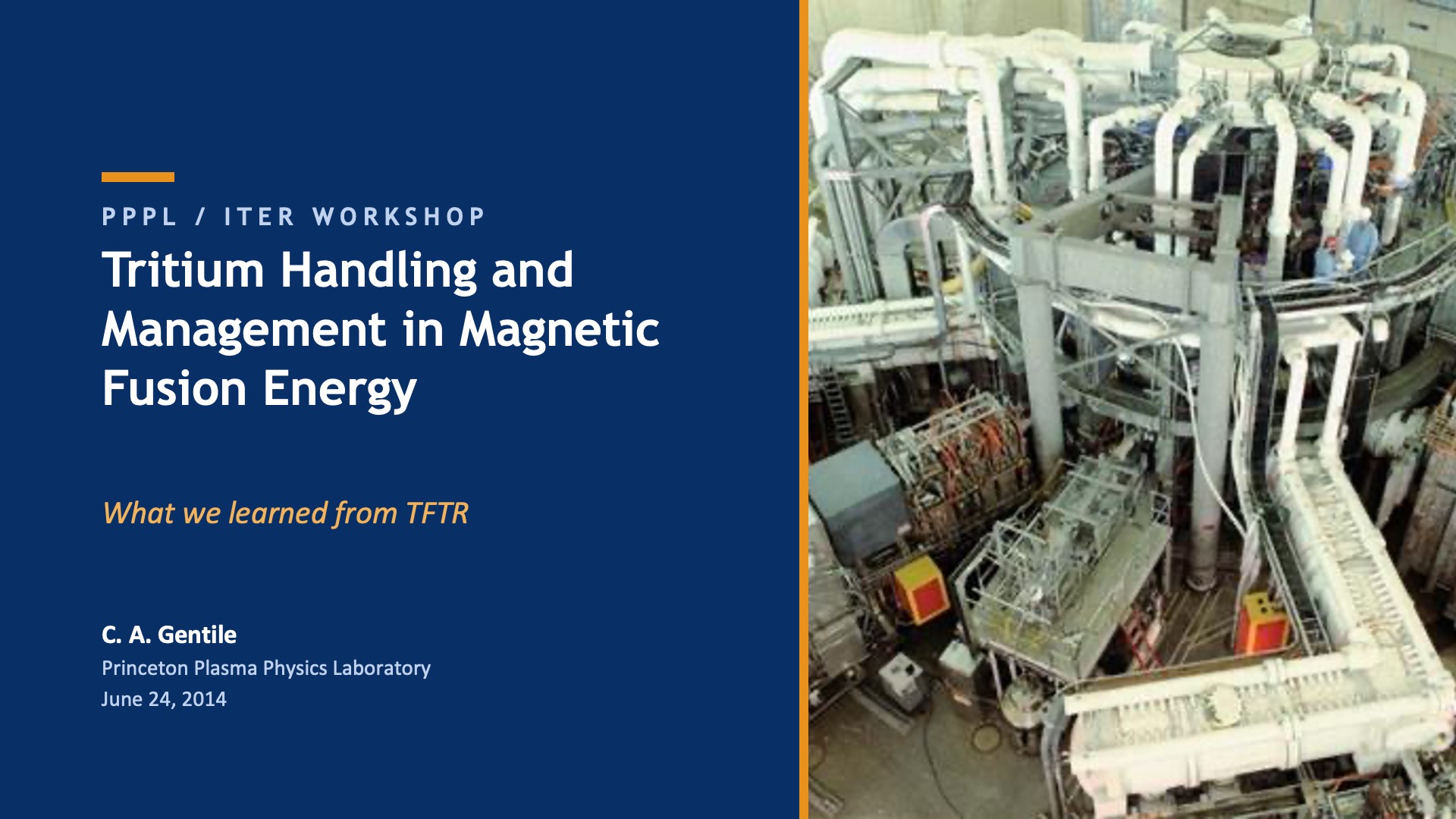
Final redesigned cover
The Brief
A technical conference deck on tritium handling in magnetic fusion energy research, presented at a PPPL/ITER workshop. The original was the kind of deck that scientific researchers build for each other in fifteen minutes — full-width orange title blocks, oversized type, dense paragraphs of body content, and no consistent visual treatment from slide to slide. The audience was technical, but the visual presentation was working against the seriousness of the content.
The Challenge
The original deck had a structural problem more than a styling problem. All twelve slides looked identical regardless of what they contained — a parameters overview, a topics list, a dense monitoring checklist, and a contamination control narrative all received the same visual treatment. The redesign had to introduce differentiation without inventing content that wasn't there. It could not add charts or data visualizations that the source material didn't support. The work was about imposing structure, hierarchy, and navigability on content that had none — while the tone and technical register of a safety-critical nuclear research environment stayed intact.
Before & After
Title slide
Before
After
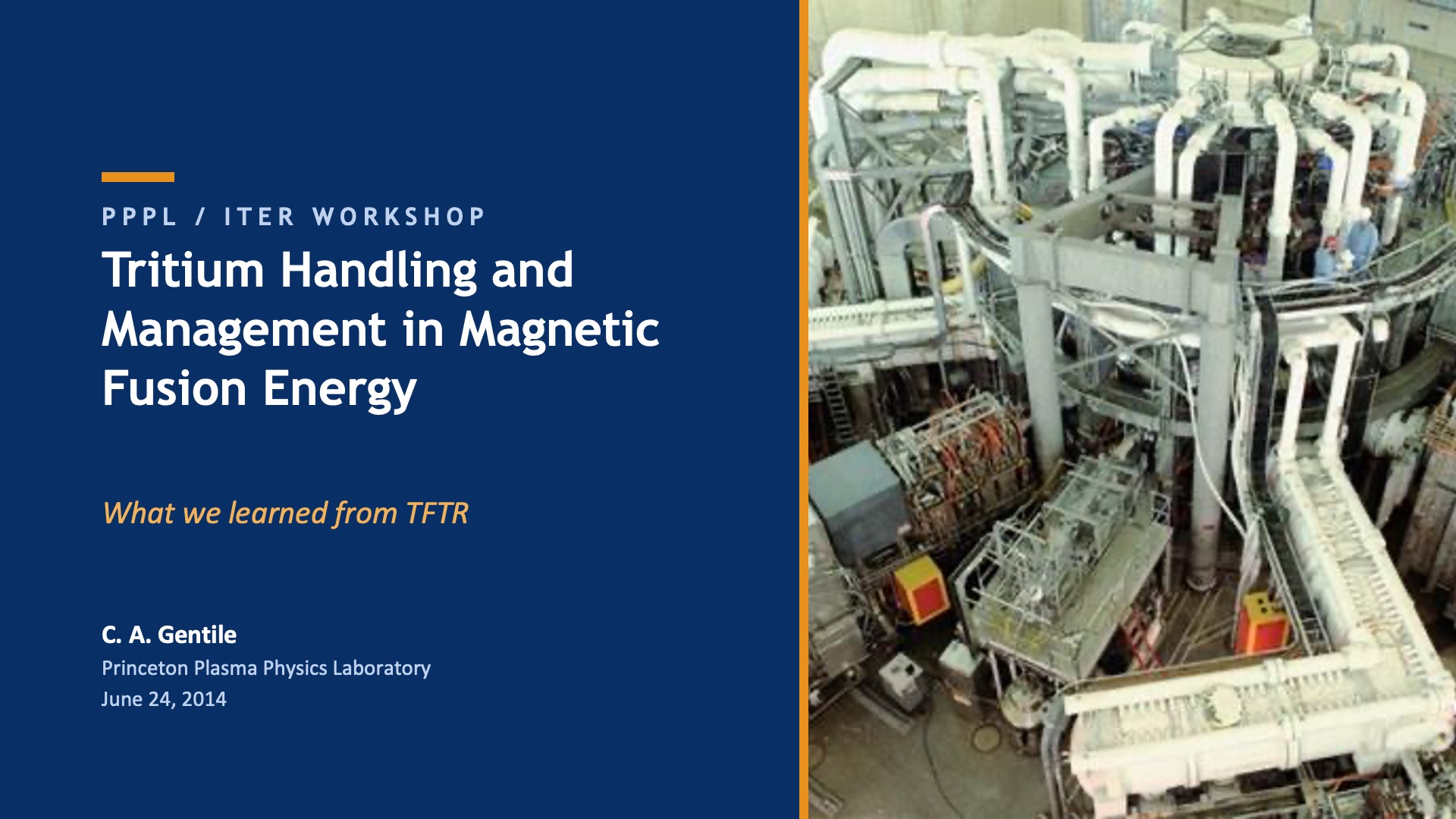
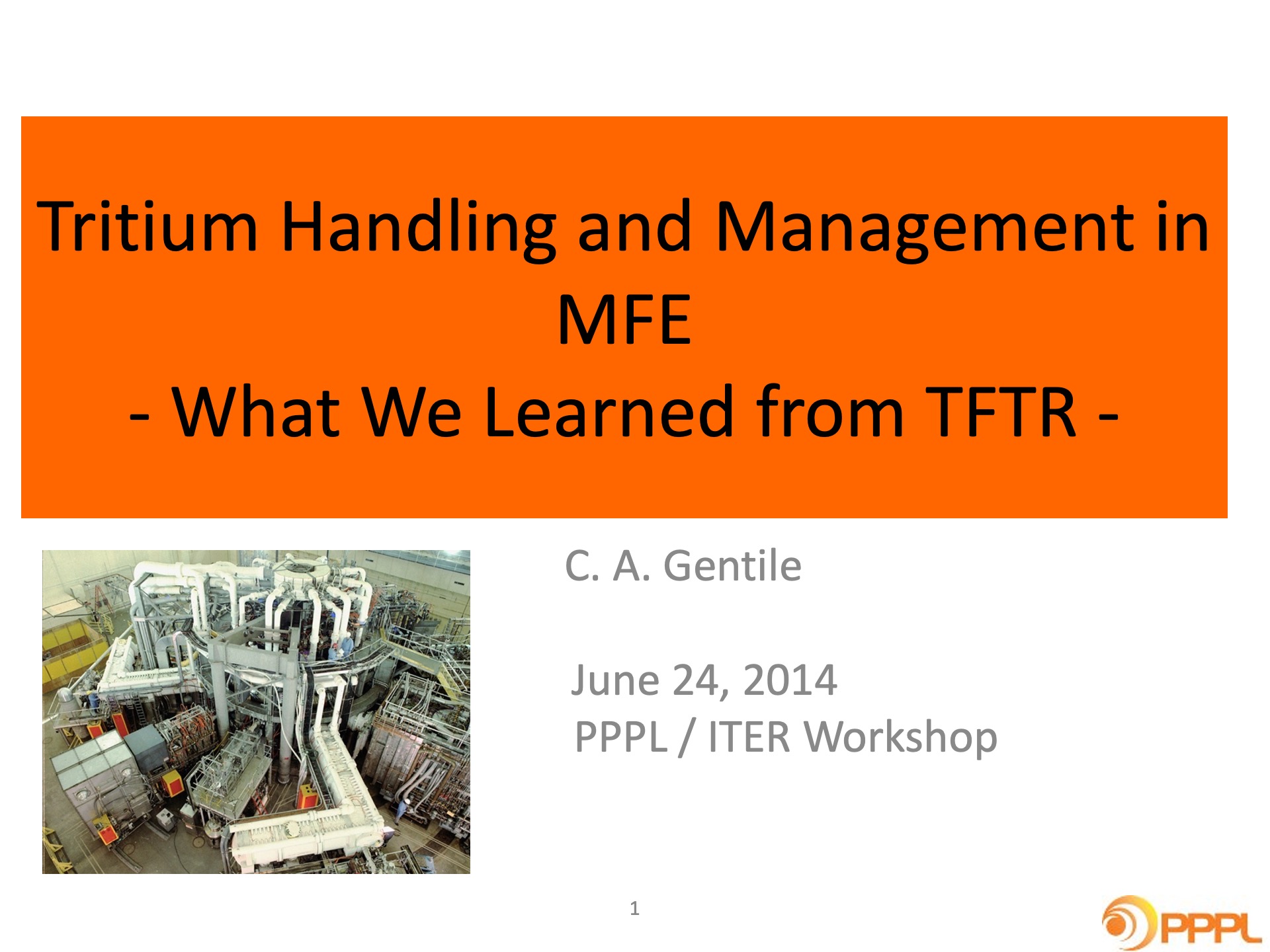
The original cover placed the presentation title inside a full-width saturated orange block occupying the upper half of the slide. The author name, date, and conference were set below in the default body font at no particular scale. The TFTR reactor photograph sat in the lower-left with no relationship to the text beside it. The redesign replaces the orange block entirely, using a dark background and a restrained accent color to reframe the technical photograph as the hero element. Author, date, and conference are organized into a structured metadata block rather than scattered loosely below the title.
Topics / agenda slide
Before
After
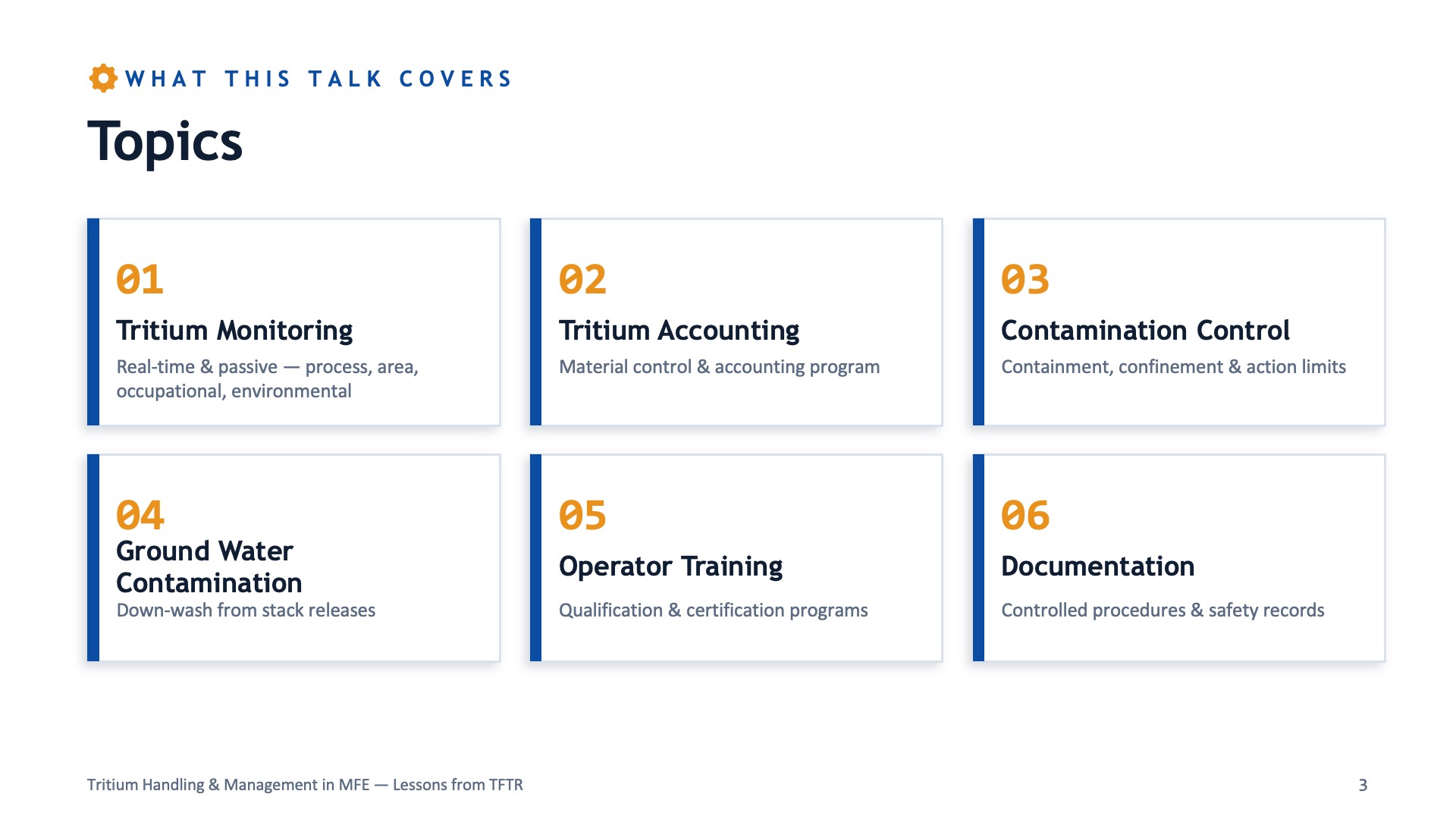
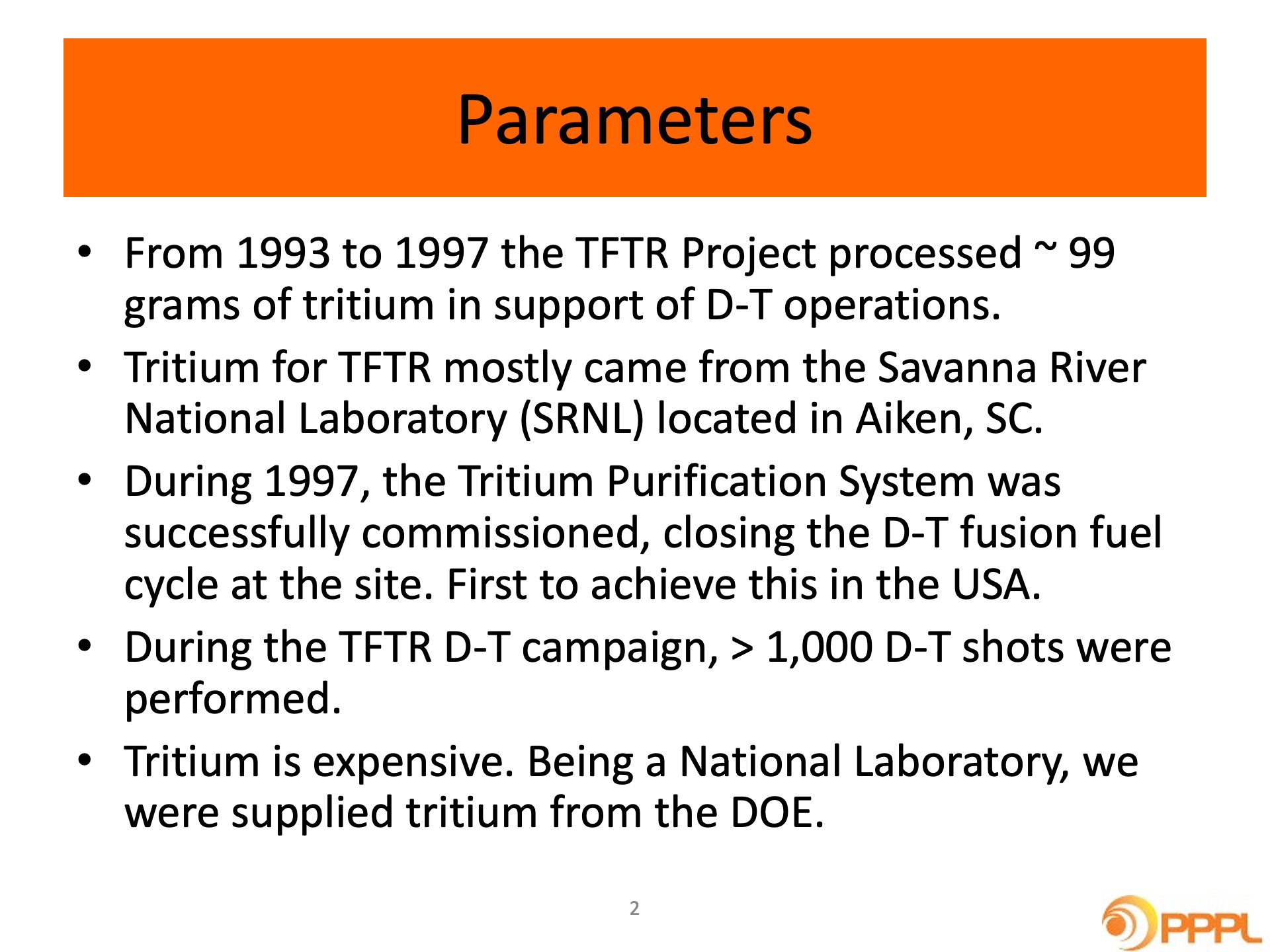
The original topics slide listed the six subject areas as plain bullets at the same weight as every other bullet in the deck, on the same orange-header template. Nothing distinguished the agenda from a content slide. The redesign converts the same six topics into a numbered list with each item set at a size and weight that reads as a navigational landmark — the audience can see the deck's six chapters at a glance and track their position throughout the presentation.
Content slide
Before
After
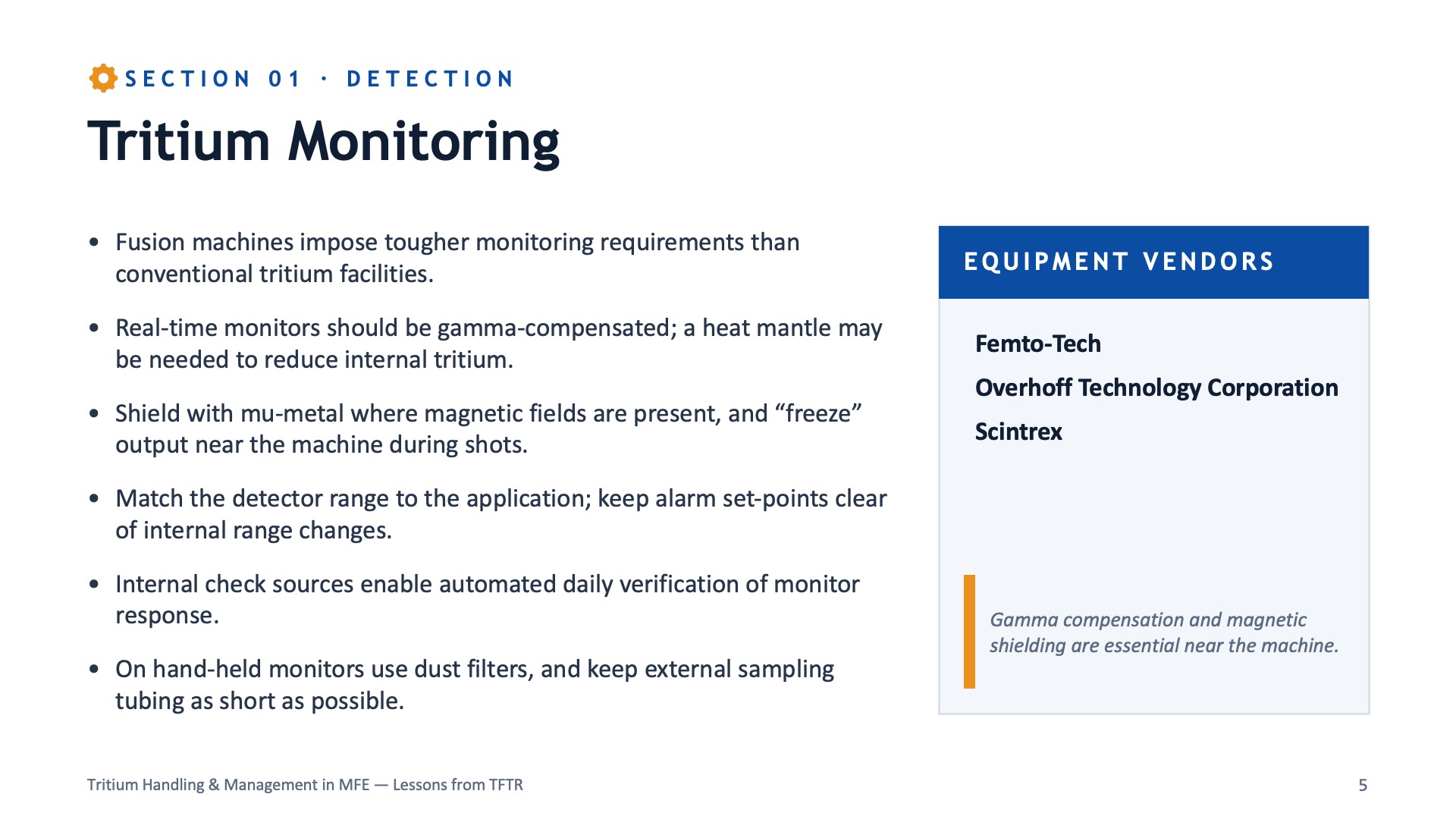
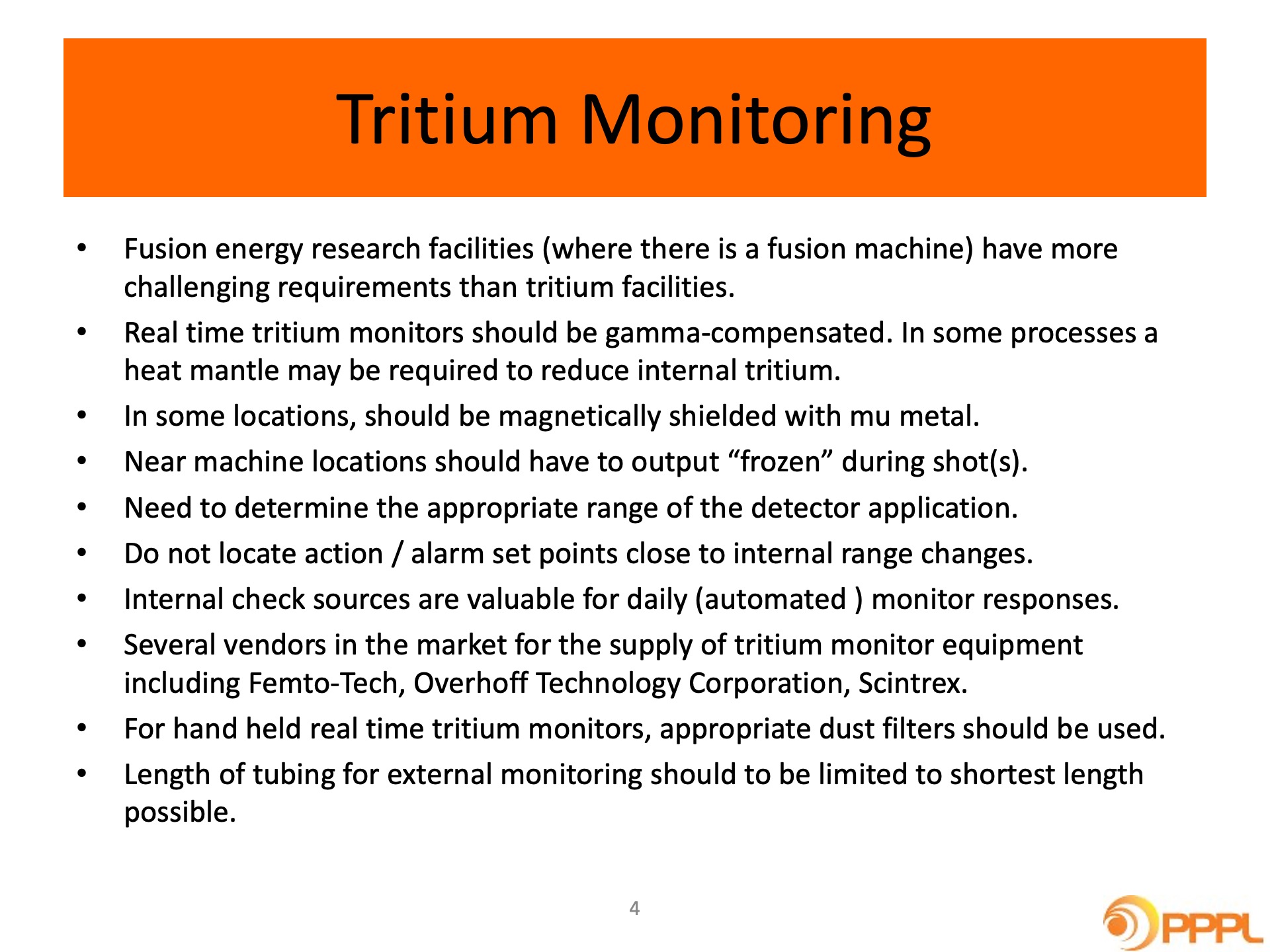
The original content slides packed all bullets at identical weight and size regardless of whether a point was a primary recommendation or a supporting detail. The Tritium Monitoring slide, for example, ran ten bullets at the same visual weight, with nothing to indicate which points were critical safety requirements and which were implementation notes. The redesign introduces a two-level hierarchy within content slides — primary points at larger weight, supporting details indented and sized down — and a section marker in the header confirming which of the six topics the current slide belongs to.
Data slide
Before
After
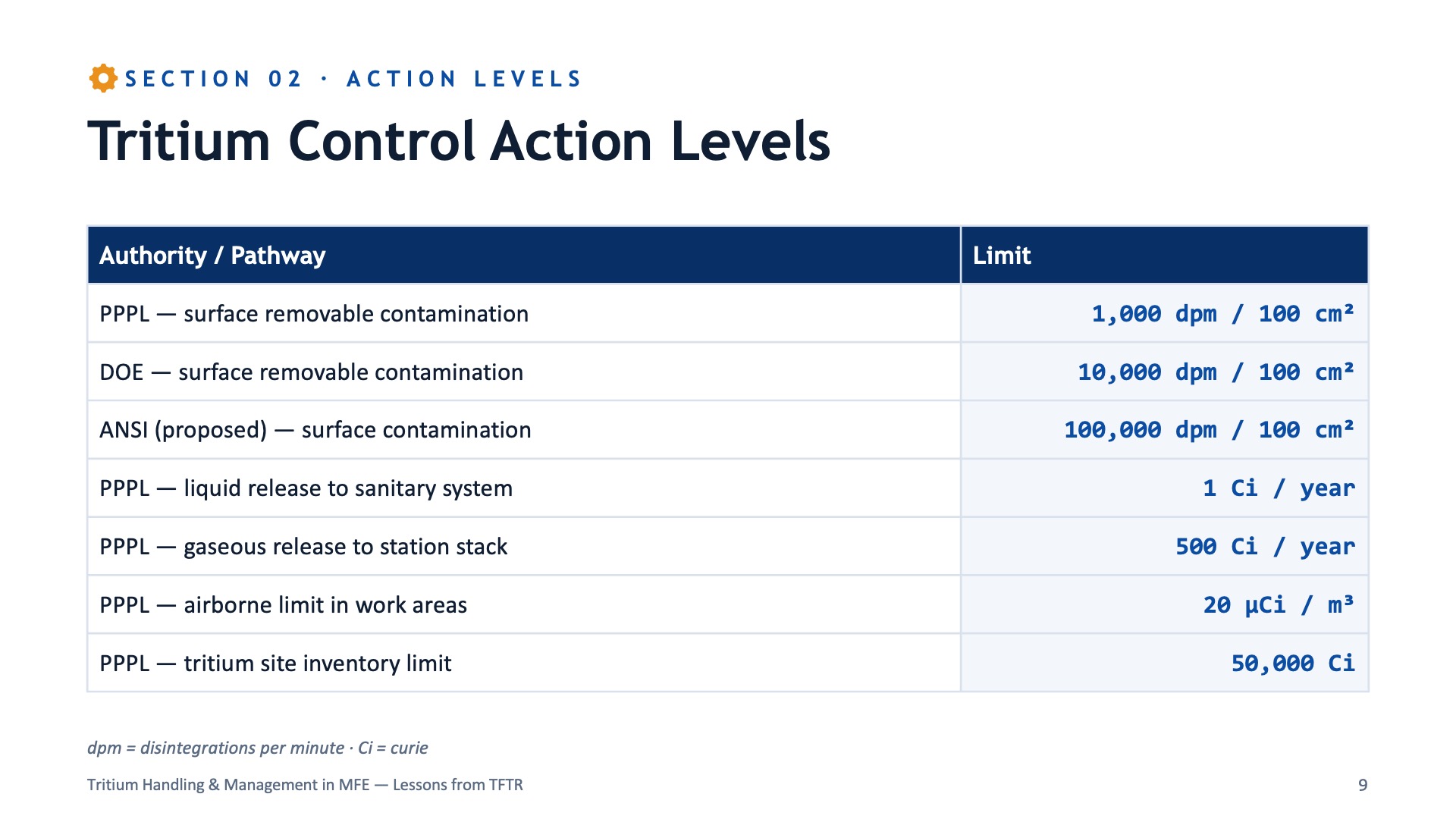
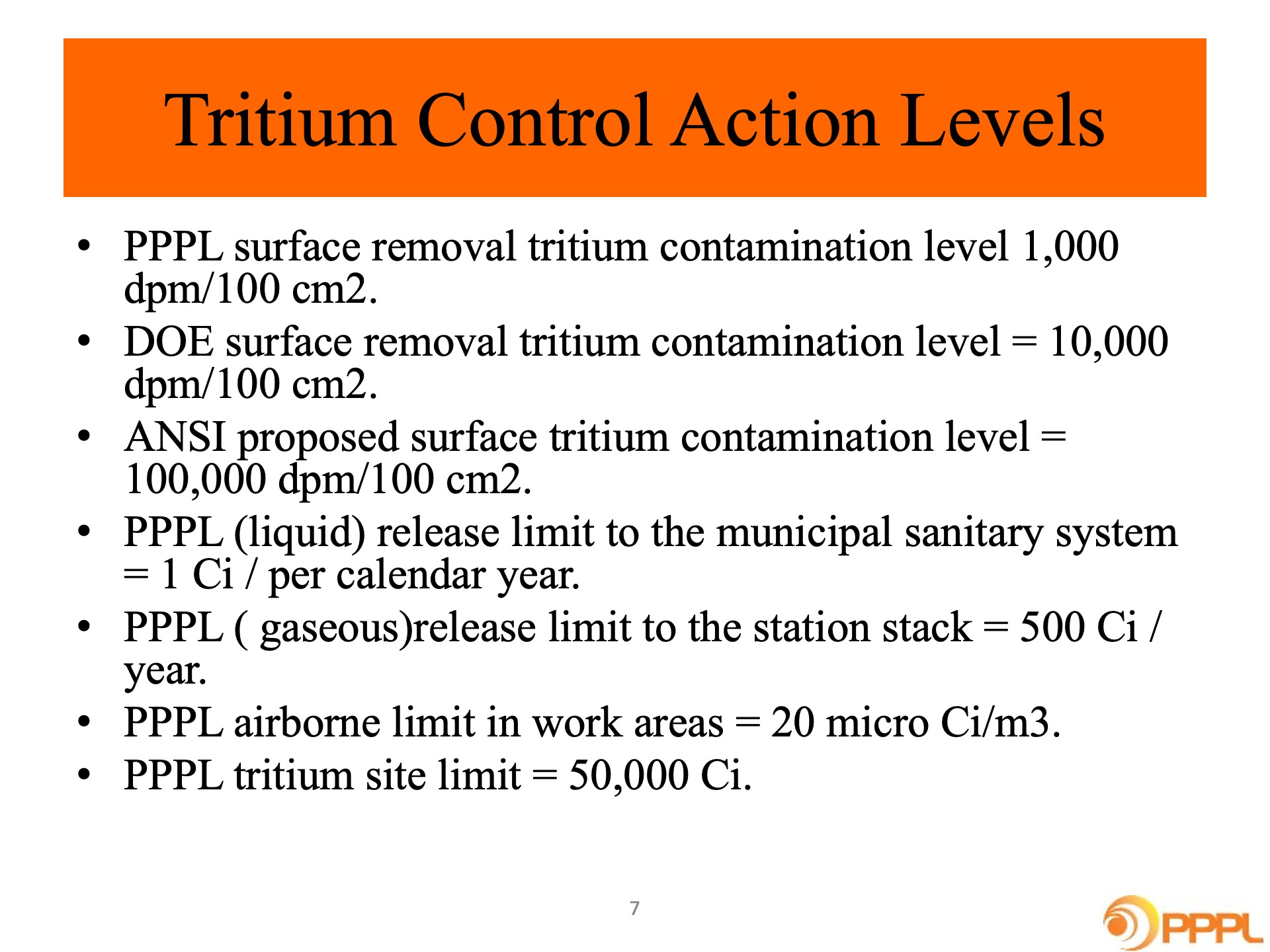
The Tritium Control Action Levels slide listed seven regulatory thresholds as bullets: PPPL limits, DOE limits, ANSI proposed limits, release limits to sanitary systems, stack limits, airborne limits, site limits. As bullets, these numbers had no visual relationship to each other and no scale context. The redesign converts the same seven data points into a structured reference layout where each limit is labeled, the governing body is identified, and the numerical value is set at a weight that makes the table scannable — the kind of layout a radiation protection officer might actually tape to a wall.
The Approach
The redesign replaced the single saturated orange template with a restrained system built around a dark anchor color, a controlled accent, and a neutral content background. Numbered section dividers were introduced to separate the six topic areas that the original flowed together without pause. Within content slides, a three-level type hierarchy replaced the flat bullet lists: section marker in small caps at the top, primary point as the slide's single most important statement, supporting bullets below at a more modest scale. The action levels slide was converted from a bullet list to a structured reference layout. The technical photograph from the cover was carried through select section dividers to maintain visual continuity. No content was added, removed, or modified — only the document's ability to communicate that content changed.
Additional Slides from the Final Deck
The Result
A 12-slide technical conference presentation that gives six distinct subject areas the visual differentiation they deserve. The redesign demonstrates that even a short, text-heavy deck gains substantially from structural discipline — numbered sections, consistent type hierarchy, and a cover that treats the subject with the seriousness a nuclear research environment requires.
Next project →
Baldrige Performance Excellence — Redesign